
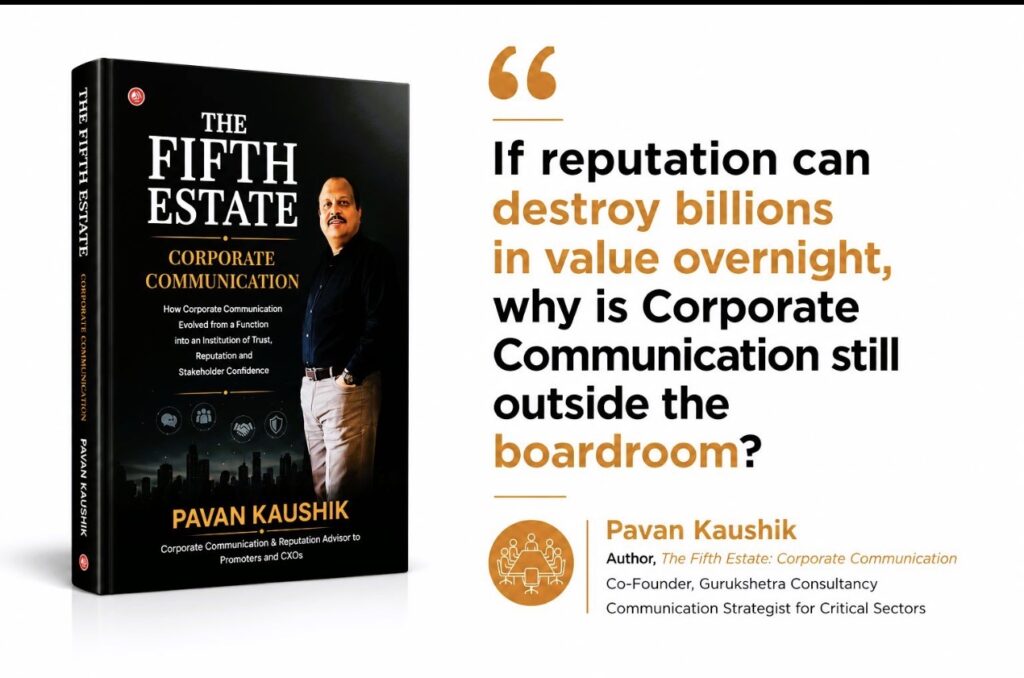
Reputation is no longer a “soft” corporate issue. It is increasingly becoming an enterprise risk, with implications for stakeholder confidence, business continuity, trust and business value.
The latest FICCI–EY Risk Survey 2026 makes this particularly significant. It found that 61% of respondents identify cyberattacks and data breaches as major financial and reputational threats. EY also notes that cyber risk has become a business-continuity and trust issue—and consequently a CEO-and-Board agenda item.
The concern is equally visible at the CEO level. KPMG’s 2025 India CEO Outlook found that 75% of CEOs in India believe cybercrime and cyber insecurity will impact their organisation’s prosperity over the next three years. The survey covered 125 CEOs in India, all representing organisations with annual revenues above US$500 million.
But this is not a post about cybersecurity.
It is about something much larger—the increasing convergence of business risk and reputation risk.
A cyber incident can become a reputation crisis.
A geopolitical development can become a stakeholder issue.
An ESG controversy can challenge credibility.
A governance failure can become a crisis of trust.
And today, each can move rapidly from an operational issue to a boardroom issue.
That is why I believe Corporate Communication cannot remain the department that is called upon merely to communicate a decision after it has been made.
Communication intelligence—stakeholder sentiment, reputation, trust, narrative and emerging public risk—needs to be present when the decision itself is being shaped.
For Promoters, CEOs and Boards, this requires a fundamental shift:
Corporate Communication must move from communicating decisions to contributing to how decisions are made.
That, in many ways, is the central argument I make in The Fifth Estate: Corporate Communication is moving from a function of messaging to an institution of organisational trust, reputation and influence.
So perhaps the question is no longer whether Corporate Communication deserves a place in strategic decision-making.
The question is: can organisations afford to keep it outside the boardroom?