
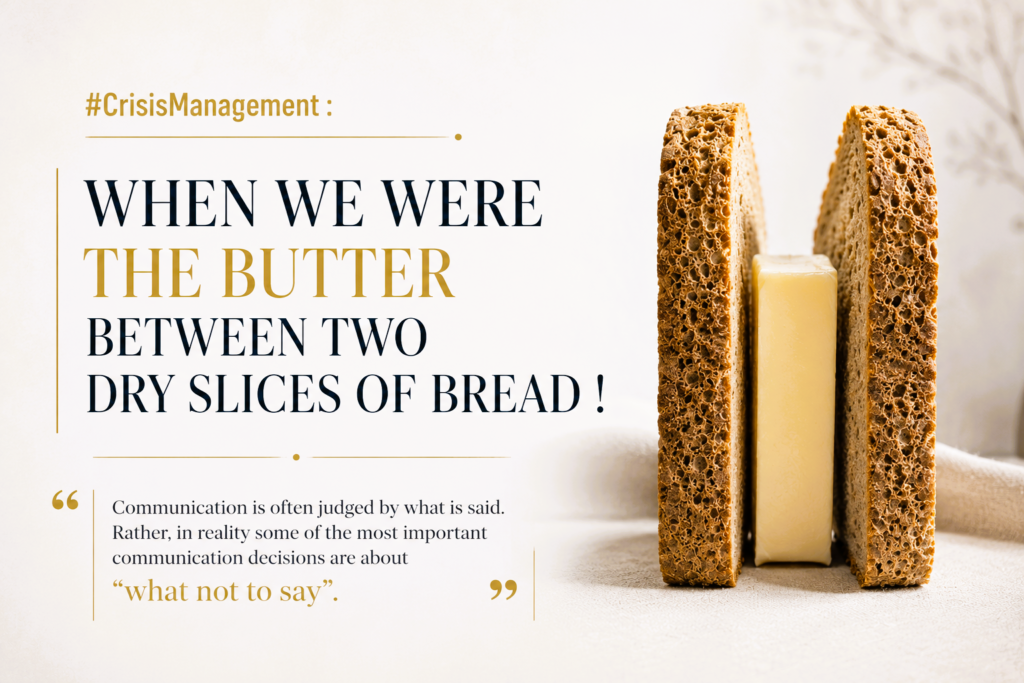
There was a time when I was leading Corporate Communication for a large mining and metals company that found itself at the centre of a major controversy.
A government-appointed committee had been constituted. Allegations dominated headlines across the country. A senior IAS officer had also been linked to the issue. Every day brought fresh media reports, speculation and mounting pressure.
Soon, journalists from across India started calling me, seeking the company’s response.
Ironically, the pressure inside the organisation was greater than the pressure outside for a response – 𝐛𝐮𝐭 𝐈 𝐰𝐚𝐬 𝐜𝐨𝐦𝐩𝐥𝐞𝐭𝐞𝐥𝐲 𝐬𝐢𝐥𝐞𝐧𝐭.
The Chairman, CEO, CFO and several senior colleagues believed it was time to issue a statement. The concern was understandable. They feared that silence might be interpreted as an admission of guilt.
𝐈 𝐜𝐨𝐦𝐩𝐥𝐞𝐭𝐞𝐥𝐲 𝐝𝐢𝐬𝐚𝐠𝐫𝐞𝐞𝐝. 𝐏𝐞𝐫𝐡𝐚𝐩𝐬 𝐟𝐨𝐫 𝐭𝐡𝐞 𝐟𝐢𝐫𝐬𝐭 𝐭𝐢𝐦𝐞, 𝐈 𝐡𝐚𝐝 𝐩𝐮𝐭 𝐦𝐲 𝐟𝐨𝐨𝐭 𝐝𝐨𝐰𝐧. 𝐍𝐨 𝐏𝐫𝐞𝐬𝐬𝐮𝐫𝐞 𝐏𝐥𝐞𝐚𝐬𝐞.
I declined every request for comments. I even stopped responding to media queries on the issue – media can put “company declined to comment’.
The pressure became so intense that I was summoned by the Chairman and asked to explain my stand.
I told him, “This fight is between the two dry slices of bread, and we don’t want to be the butter between them. If we speak now, both sides would want a bite. We will become the easiest target. The debate will shift from the investigation to our response. Let the bread remain dry for some more time. Without butter, dry breads won’t survive for long.”
I further said – “Once an organisation enters a public debate during an ongoing inquiry, every statement creates another question, every clarification generates another headline, and every headline extends the life of the controversy. Silence, in this case, was not weakness. It was a well-thought strategy.”
The Chairman heard me patiently and agreed.
The company maintained its silence.
A few months later, the inquiry concluded. The controversy subsided. The senior government official was reinstated to the same department. The news cycle moved on, and the organisation returned to normal.
Looking back, I have never considered that decision to be about media management.
It was a leadership decision based on one simple belief:
Corporate Communication is not about speaking at every opportunity. It is about knowing when silence protects the organisation better than words.
Communication is often judged by what is said.
In reality, some of the most important communication decisions are about “what not to say”.